A corporate data protection officer requires more than just a formal appointment. What is crucial is a robust operational model with clear responsibilities, resources, reporting structures, audits, and escalation procedures.
Privacy-IRM software should not be evaluated solely based on feature lists. What matters most is whether roles, workflows, evidence, permissions, and operational risks can actually be managed within the ongoing governance process.
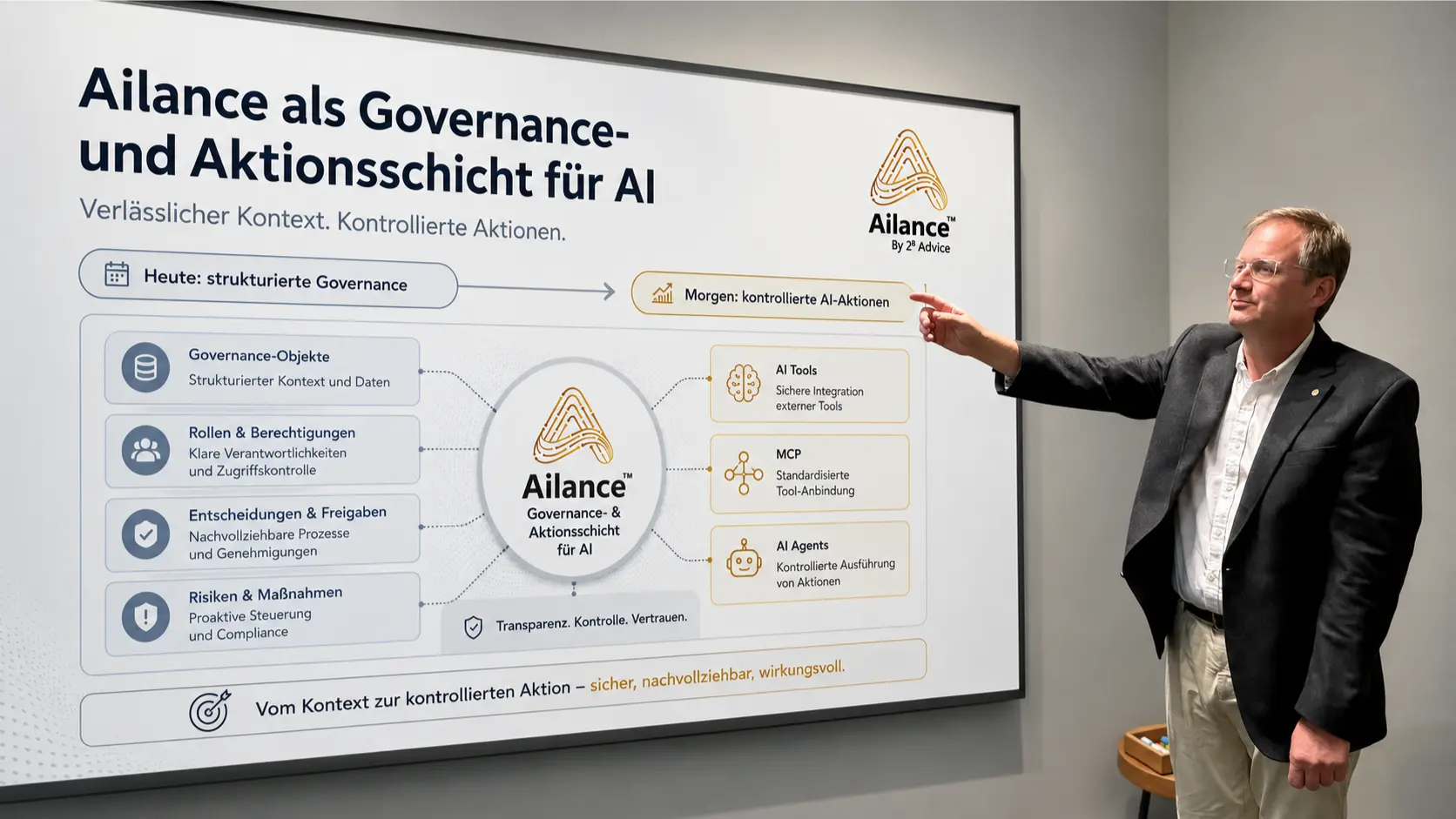
AI requires clear governance processes: use cases, risks, roles, approvals, and documentation must be brought together in a structured manner so that AI can be used safely and transparently within the company.
Data protection records are only audit-ready if the processing, risk, approval, version, and measures remain traceably linked. Why email, Teams, and drives are often insufficient for this purpose.
There are processing records that look impressive. Neat columns. Well-defined terms. A last-modified date that isn't too embarrassing. During an audit, you can open them up, take a quick look at
Enterprise GRC systems have long been considered the standard for governance, risk, and compliance in large organizations. In practice, however, a conflict is increasingly coming to light: particularly in the
Modern transcription systems not only convert speech into text, but also attempt to identify individual speakers. As a result, they are not only directly subject to the requirements of the
In many companies, data protection seems to function smoothly. However, a closer look reveals that the majority of these processes are organized via email. Precisely
Google will reclassify its role in the use of reCAPTCHA under data protection law and will no longer act as a controller but as a processor from April 2026. What this means
Customer database data contains personal information such as names, addresses, contact details and purchase histories, which can be used for targeted customer contact and individual support. The handling of this data